

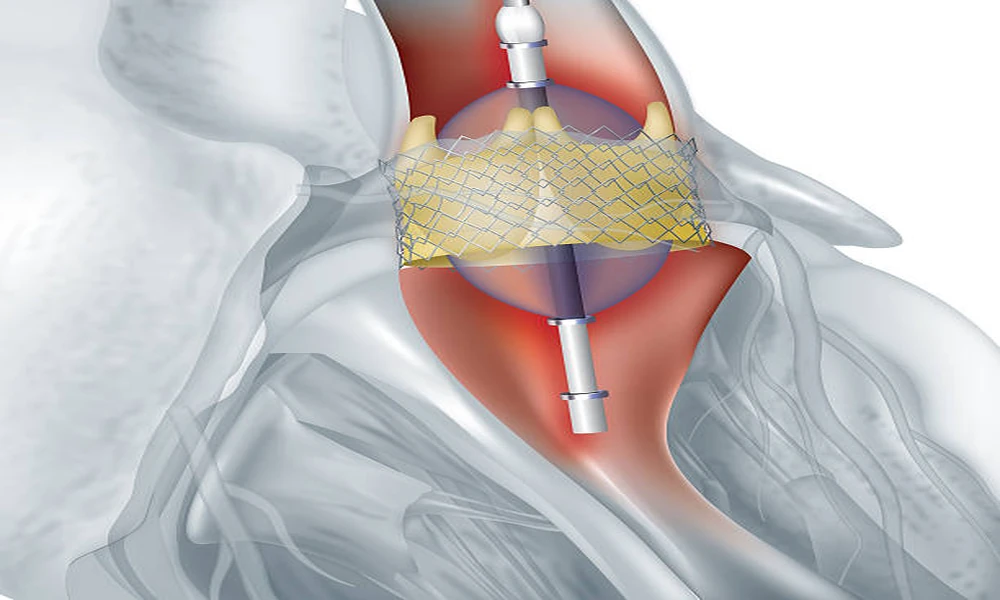
Transcatheter aortic valve replacement, abbreviated TAVR (and called TAVI, for implantation, in much of India and Europe), is a way of replacing a narrowed aortic valve through a catheter rather than open surgery. Most articles about its price quote one headline figure for the procedure. In reality, the money is spent across a journey that starts weeks before the procedure and continues for a year afterwards. This guide follows that journey stage by stage, so you can see where the cost actually falls and plan for it.
Stage 0: understanding the term and who qualifies
Aortic stenosis is a stiffening and narrowing of the valve between the heart’s main pumping chamber and the aorta. Once it is severe and causes symptoms, medicines do not fix it; the valve needs replacing. The transcatheter method delivers a new valve, crimped onto a catheter, through the femoral artery and expands it inside the old valve.
Eligibility depends on surgical risk and anatomy. It was first used for patients too frail for surgery, then for those at high and intermediate risk, and is now considered for selected lower-risk patients, particularly older ones. Younger patients with a long life expectancy are still often advised to have surgery. The heart team, including an interventional cardiologist and a cardiac surgeon, makes this call together. The TAVR procedure overview on the Heart Valve Experts site covers risks, benefits and recovery in more detail.
Stage 1: diagnosis and first consultation
What happens: a cardiologist confirms severe aortic stenosis with an echocardiogram and assesses symptoms and other illnesses.
Approximate cost: a consultation and a transthoracic echo together are usually in the low thousands of rupees in a private setting; less in government or trust hospitals. If you are seeking a second opinion, budget for another consultation.
Stage 2: pre-procedure workup
This is the stage most families underestimate. A transcatheter valve must be sized precisely, and the route to the heart must be checked.
- CT angiography of the heart and the arteries from the groin to the chest (the key test for sizing and access)
- Coronary angiogram or CT coronary assessment to look for blockages
- Blood tests, kidney function, ECG, chest X-ray
- Lung function tests or a dental check in some cases
- Frailty and cognitive assessment in older patients
Approximate cost: commonly ₹40,000 to ₹1 lakh or more in total, depending on how many tests are needed and whether the angiogram is done as a day case. Some hospitals bundle these into the package; many do not. The pre-operative workup for TAVI article lists the tests in detail.
Stage 3: the procedure and hospital stay
What happens: the valve is implanted in a cath lab or hybrid theatre under sedation or general anaesthesia, usually in one to two hours. You spend a night in the cardiac ICU, then one to two days in a ward, and are typically walking the next day.
Approximate cost: this is where the bulk of the money goes. The transcatheter aortic valve replacement cost in india for the procedure and stay is commonly quoted in the region of ₹18-30 lakh in private hospitals, with the valve accounting for the majority. Indian-made valves bring the figure towards the lower end; imported valves and premium rooms push it towards the upper end. The number is indicative only and varies by city, hospital and your anatomy; the exact figure must come from your treating hospital’s written estimate.
Possible add-ons at this stage: a permanent pacemaker (required in a minority of patients when the new valve presses on the heart’s conduction system), a longer ICU stay, or treatment of a vascular complication at the puncture site.
Stage 4: discharge and the first month
What happens: you go home on antiplatelet or anticoagulant medicines, with instructions on wound care, activity and warning signs. A clinic visit and echocardiogram are usually scheduled at about 30 days. The post-procedure care in TAVI guide explains what to expect.
Approximate cost: medicines for the first month are usually a few thousand rupees; the 30-day visit and echo a few thousand more. If you are treated away from home, add travel and accommodation for the follow-up.
Stage 5: the first year and beyond
What happens: follow-up echocardiograms at six months and one year, then yearly, to check valve function. Continued antiplatelet therapy, antibiotic prophylaxis before dental work, and management of blood pressure, cholesterol and any heart rhythm problems.
Approximate cost: a few thousand rupees per visit plus medicines, ongoing. Patients who received a pacemaker will need periodic device checks.
Putting the journey together
| Stage | Where the cost typically sits |
|---|---|
| Consultation and echo | Low thousands |
| Workup (CT, angiogram, tests) | ₹40,000-1 lakh or more |
| Procedure and stay | ₹18-30 lakh (indicative) |
| First-month follow-up and medicines | A few thousand |
| Yearly follow-up | A few thousand per year |
Insurance normally applies to Stage 3 and to tests done within the policy’s pre- and post-hospitalisation window (often 30 and 60 days). Check whether your insurer caps implant costs and whether the hospital is on its cashless network.
When to seek urgent care
Before the procedure: fainting, chest pain or breathlessness at rest with known severe aortic stenosis is an emergency. After the procedure: a swollen or bleeding groin, new fainting, a very slow pulse, fever or sudden breathlessness need immediate attention.
Summary
Seen as a journey, the transcatheter aortic valve replacement cost in india is one large item surrounded by several smaller ones that are easy to overlook. Ask your hospital which stages its package covers, and plan the rest.
Disclaimer: This article is for general information only and is not a substitute for medical advice. Please consult a qualified cardiologist about whether TAVR is suitable for you and for an exact cost estimate.